Crypto ATMs · Sydney, NSW
Bitcoin ATMs in Sydney: the full picture
Sydney has one of the densest crypto ATM networks in the country — and one of the highest markups. Before you feed banknotes into a machine on Pitt Street, here is exactly what it costs, what ID you need, and what AUSTRAC changed in 2025.
Trading crypto carries risk. Verify any provider's AUSTRAC registration before you send money.
Last reviewed: August 2026
How a Sydney crypto ATM actually works
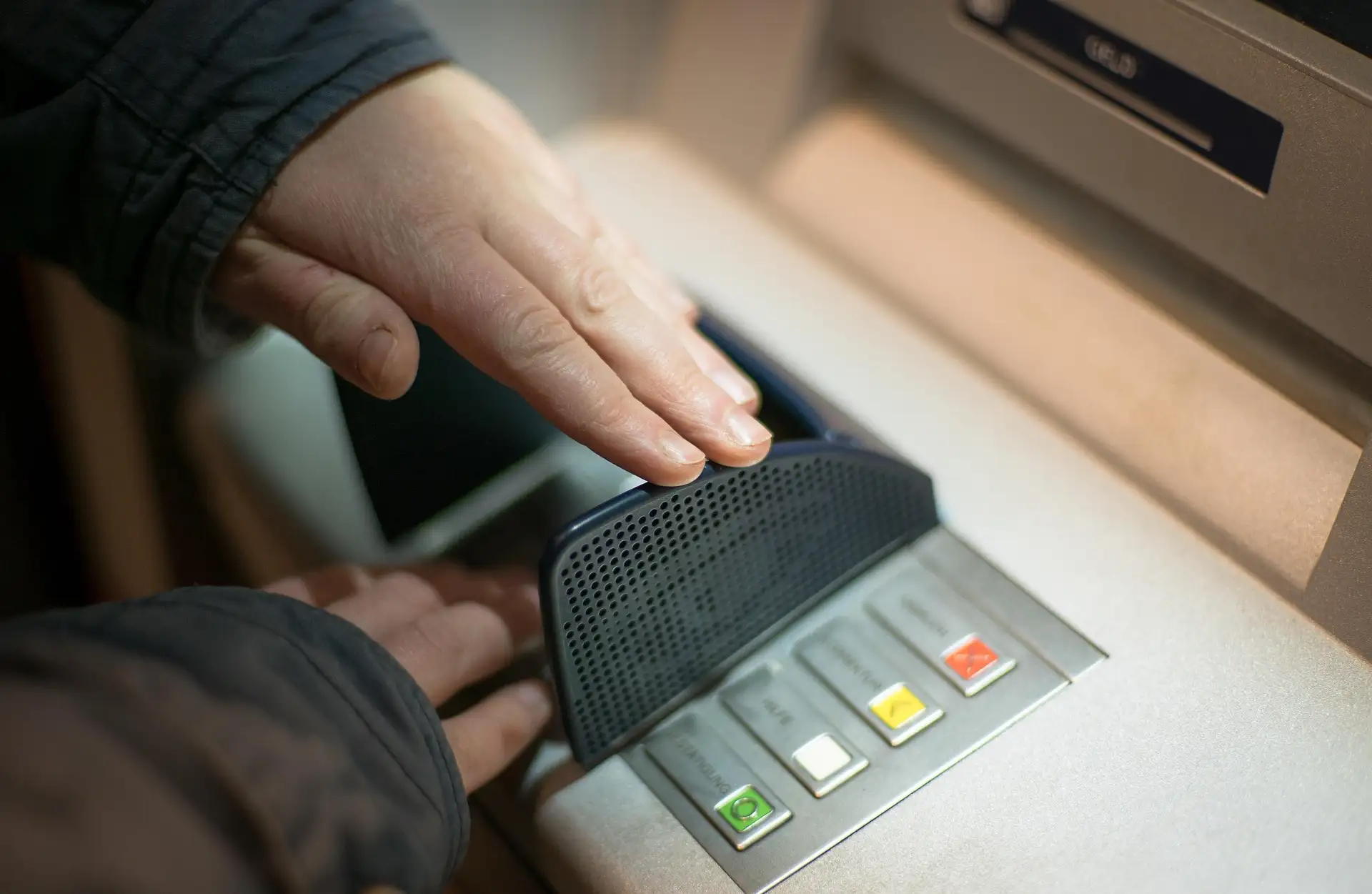
A crypto ATM is not really an ATM. It is a cash-accepting kiosk connected to an exchange account owned by the operator. You feed in banknotes, the machine quotes you a price that already includes its markup, you present a wallet address as a QR code, and the operator sends that amount of Bitcoin from their own holdings to your address. The machine is a shopfront for a broker, and the fee is the broker's margin.
Understanding that framing explains everything else about the category. It explains why the price is worse than an exchange — you are buying from an intermediary who bought it wholesale. It explains why identity verification applies — the operator is an AUSTRAC-registered business exchanging AUD for digital currency, exactly like any exchange. And it explains why the machines cluster in convenience stores: the operator pays the store a fee for floor space and power, so any shop with long hours and foot traffic is a candidate.
The genuine advantages are real and worth naming. A machine converts physical banknotes into self-custodied Bitcoin in under ten minutes, with no bank account involved at any point, at three in the morning if you need it to. Nothing else in Sydney does that. Whether that is worth a double-digit percentage is the question this page is trying to help you answer.
Who runs the machines in Sydney
Localcoin is the dominant operator across New South Wales. It is a Canadian-founded network that expanded aggressively into Australia and now runs machines throughout Sydney, typically inside 24-hour EzyMart stores, independent supermarkets, minimarts and takeaway shops. Localcoin publishes its fee structure openly, which we respect, and that transparency is what lets us quote real numbers below.
Beyond Localcoin, a mix of smaller operators run units through convenience stores, IGA supermarkets, hotels and shopping-plaza kiosks across the metro area. Machines from these operators support Bitcoin and often Litecoin, sometimes Ethereum, and may be buy-only rather than two-way. Separately, Bitcoin Dealers operates a physical shopfront model — staffed offices rather than kiosks — which is a meaningfully different experience covered on our where to buy page.
Operator turnover in this sector is real. AUSTRAC refused to renew the registration of at least one Australian ATM operator in 2025 following compliance failures. Machines appear and disappear as host agreements change. That is why we do not publish a static list of addresses on this site — a stale address list wastes your trip. Use the operator's own live map on the day.
- Typical buy markup
- ~12%
service fee built into the quoted rate - Typical sell fee
- ~6%
on two-way machines that dispense cash - AUSTRAC cash cap
- A$5,000
per customer, in or out
Where Sydney's machines cluster
Placement follows retail hosting, which produces a predictable map. The Sydney CBD is the densest zone in the state, with machines along and around Pitt, George, King, Kent, Bridge, Elizabeth and Liverpool streets — the Wynyard-to-Town-Hall spine, essentially, plus the Circular Quay end. Haymarket and Chinatown add a cluster with genuine late-night access. Parramatta anchors Western Sydney. Bondi Junction covers the east around the interchange and mall. Then units scatter through Waterloo, Drummoyne, Earlwood, Newtown and the southwestern suburbs wherever a suitable host exists.
Coverage thins dramatically on the North Shore, Northern Beaches, in the Hills district and through the Sutherland Shire. If you live in those areas, driving to a machine and paying a twelve percent markup for the privilege is a poor trade — see the alternatives section.
For street-level detail on the city centre, including which strips have the most reliable late-night access, see our dedicated Bitcoin ATMs in Sydney CBD and Haymarket page.
Before you walk to a machine Compare what the same purchase costs on a licensed exchange with Australian card funding — the gap is usually double digits.
Compare pricingWhat a Sydney crypto ATM really costs
Machine pricing is deliberately hard to read, because the fee is not shown as a fee — it is baked into the exchange rate the screen offers you. Localcoin explains its own structure clearly enough that we can use it as the reference case: a service fee in the region of twelve percent on buys, folded into the displayed price, plus a small flat network fee that goes to miners rather than the operator. On sells, roughly six percent, again included in the displayed rate.
Translated into dollars, if Bitcoin is trading at A$150,000 on global markets, a machine applying a twelve percent service fee will effectively price it near A$168,000 for you. You will not see "12%" anywhere on the screen. You will simply receive less Bitcoin than the market rate would give you, and unless you checked the market price on your phone before walking in, you will have no idea.
| Route | Cost of A$1,000 buy | You keep | Time |
|---|---|---|---|
| Exchange, limit order | ~A$2 – A$7 | ~A$995 | Minutes |
| Exchange, instant buy | ~A$10 – A$18 | ~A$985 | Seconds |
| Newsagency cash deposit | ~A$20 – A$25 | ~A$977 | Under an hour |
| Card purchase | ~A$20 – A$40 | ~A$970 | Seconds |
| Crypto ATM | ~A$80 – A$150 | ~A$880 | 5–10 min |
Nobody should read that table as "machines are a rip-off." They are a priced convenience product, like an airport currency booth, and there are legitimate reasons to use one. But you should choose it knowing the number, not discover it afterwards.
Limits and the AUSTRAC cash cap
In June 2025, AUSTRAC placed formal operating conditions on Australian crypto ATM operators after a taskforce found patterns consistent with scams and fraud. The headline condition is a A$5,000 cap on cash deposits and withdrawals per customer, alongside enhanced customer due diligence, mandatory on-screen scam warnings and stronger transaction monitoring. The regulator also signalled that it expects exchanges accepting cash to consider similar limits.
The trigger was stark. Australian authorities recorded around 150 reports of crypto ATM scams in a single twelve-month period with roughly A$3 million in losses, and identified people aged sixty to seventy as both among the heaviest users of the machines and among the most frequent victims.
On top of the regulatory cap, individual operators set their own limits. Localcoin publishes minimums around A$5, per-transaction ceilings in the low thousands, and daily limits that vary by verification level. Expect the machine to refuse a large single transaction and expect limits to reset on a rolling 24-hour basis rather than at midnight.
Identity checks: what you will actually be asked for
The persistent myth that crypto ATMs are anonymous is simply not true in Australia, and has not been for years. Operators are registered with AUSTRAC under the AML/CTF Act 2006 and must identify customers, monitor transactions and report suspicious matters. What varies is how much identification a given amount triggers.
In practice verification is tiered. The smallest transactions typically require a mobile phone number and an SMS code, which ties the transaction to a number registered in your name. Moving up, you will be asked to scan photo identification — an Australian driver licence is the usual choice — and complete a facial match against it. Higher tiers may require additional documentation or a manual review. Since the 2025 conditions tightened due diligence, expect more verification at lower thresholds than older guides describe.
Bring a physical driver licence, not a digital one on a phone screen, because machine cameras handle plastic cards far more reliably than glare-prone displays.
Using a Sydney machine, step by step
If you have decided a machine is right for your situation, do it in this order. The people who have bad experiences almost always improvised at the machine rather than arriving prepared.
Confirm the location on the operator's live map the same day. Third-party aggregator listings go stale, host stores change hands and units go offline for maintenance. Check the posted trading hours of the host store too — "24/7 machine" and "shop open until 10pm" are not compatible claims.
Have your wallet ready before you leave home. Open your wallet app, generate a receiving address and know how to display its QR code. Fumbling with a wallet app at a machine in a busy shop is how addresses get mistyped and how shoulder-surfing happens. If you do not yet have a wallet, read our wallet guide first.
Check the market price on your phone before you insert cash. Thirty seconds on any price site tells you what the machine's markup actually is that day. If the gap is far worse than you expected, you can still walk away.
Feed cash, scan your address, confirm, keep the receipt. The printed receipt is your cost-base record for the ATO and your only evidence if something goes wrong with the transaction. Photograph it as well, because thermal receipts fade.
If anyone is on the phone with you while you use a crypto ATM, you are being scammed. No bank, no police officer, no tax official, no tech support agent and no romantic partner has a legitimate reason to have you feed cash into a crypto machine. The same applies if someone sent you a wallet address or a QR code to scan. Walk out, hang up, and call the real organisation on a number you looked up yourself. See our Sydney scam guide.
Why AUSTRAC came down on this sector
Understanding the scam problem is not optional context — it explains the queues, the warnings on the screens and the caps on your transaction.
Irreversibility is the appeal
To a scammer, a crypto ATM is a way to convert a victim's cash into an untraceable, unrecoverable transfer in ten minutes. That is precisely the property that makes machines attractive to criminals.
Older Australians are targeted
AUSTRAC identified 60–70 year olds as both heavy machine users and frequent victims. If an older relative suddenly asks about crypto ATMs, ask who told them to.
Regulator response
A$5,000 cash cap, mandatory scam warnings on screen, enhanced due diligence, and at least one operator refused re-registration. Expect further tightening.
Cheaper alternatives that still work with cash
The reason most people use a machine is that they are holding banknotes. That is a solvable problem in Australia without paying double digits.
The strongest alternative is a cash deposit at a participating newsagency through the Blueshyft network, which several Australian exchanges support. You generate a barcode in the exchange app, hand your cash over the counter, the clerk scans it and the funds credit to your account, typically within minutes, at roughly two to two and a half percent. Same banknotes, same Bitcoin, roughly a fifth to a tenth of the cost. The full mechanics, minimums and caps are on our buy crypto with cash page.
If you have a bank account, a PayID transfer into an exchange is free and instant, and an order-book purchase costs a fraction of a percent. If you have an Australian card, instant card funding on a licensed platform will still cost far less than a machine. And if you are selling rather than buying, check our cash-out guide before accepting a machine's six percent.
When does a machine genuinely make sense? When you need Bitcoin in your own wallet within the hour, you have physical cash, you do not have a verified exchange account, and the amount is small enough that a double-digit percentage is a tolerable cost of speed. That is a real scenario. It is just far rarer than the machine network's footprint suggests.
- Check the market price on your phone before inserting a single note.
- Bring a physical driver licence — machine cameras struggle with phone screens.
- Never scan a wallet QR code that someone else provided, for any reason.
- Keep and photograph the receipt: it is your ATO cost base and your only dispute evidence.
Frequently asked questions
How much does a Bitcoin ATM charge in Sydney?
Expect an all-in cost of roughly 8% to 15% on a buy. Localcoin, the largest operator locally, publishes a service fee in the region of 12% built into the buy price plus a small flat network fee, and around 6% on sells. That is the price of the machine's convenience — an online exchange typically costs between 0.1% and 0.7% for the same transaction.
What is the maximum I can put through a crypto ATM in Australia?
AUSTRAC imposed conditions on crypto ATM operators in mid-2025 including a A$5,000 cap on cash deposits and withdrawals per customer. Operators also set their own per-transaction ceilings and daily limits, and those limits step up as you complete higher verification tiers. Minimums are typically around A$5 to A$20.
Do Sydney Bitcoin ATMs require ID?
Yes. Crypto ATM operators are registered with AUSTRAC and must verify customers. In practice verification is tiered: a mobile number and SMS code for the smallest amounts, then photo ID — usually a driver licence scan — plus a facial match as amounts rise. The idea that machines are anonymous is out of date in Australia.
Can I sell Bitcoin for cash at a Sydney ATM?
Some machines are two-way and will dispense banknotes; many are buy-only. Sell fees run around 6% with Localcoin, and the A$5,000 AUSTRAC cash cap applies to withdrawals as well. Check the machine type before travelling. Our selling guide covers cheaper cash-out routes.
Are crypto ATMs in Sydney safe to use?
The machines themselves are legitimate businesses operating under AUSTRAC registration. The risk is not the hardware — it is that crypto ATMs are the preferred collection method for scammers, who direct victims to feed cash into a machine and scan a QR code the scammer supplies. If anyone is on the phone with you at a machine, or gave you the wallet address, stop immediately.
How long does a Bitcoin ATM transaction take?
The machine transaction takes about five to ten minutes including verification. The Bitcoin itself then needs network confirmation, which typically arrives within ten to sixty minutes depending on congestion. Some operators send instantly to the address and it simply appears as unconfirmed first.